When Can You Find Out Your Baby's Gender? A Week-by-Week Guide
From blood tests at 10 weeks to the 20-week anatomy scan, here is when and how you can learn whether you're having a boy or a girl.
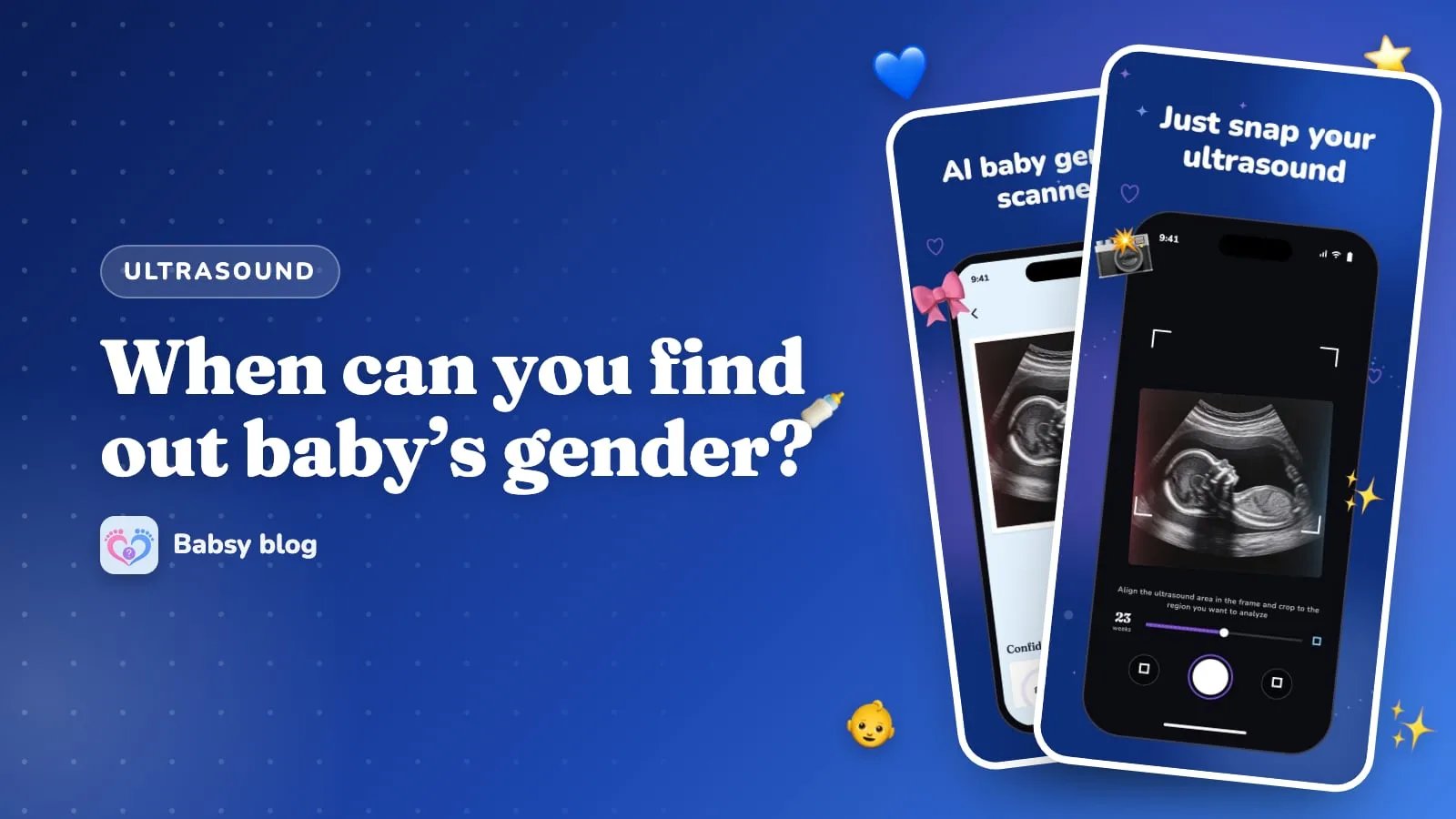
Few questions arrive faster after a positive test than boy or girl? The good news: you have more options, and earlier ones, than your parents did. Here is a calm, week-by-week look at what is possible and how reliable each method is.
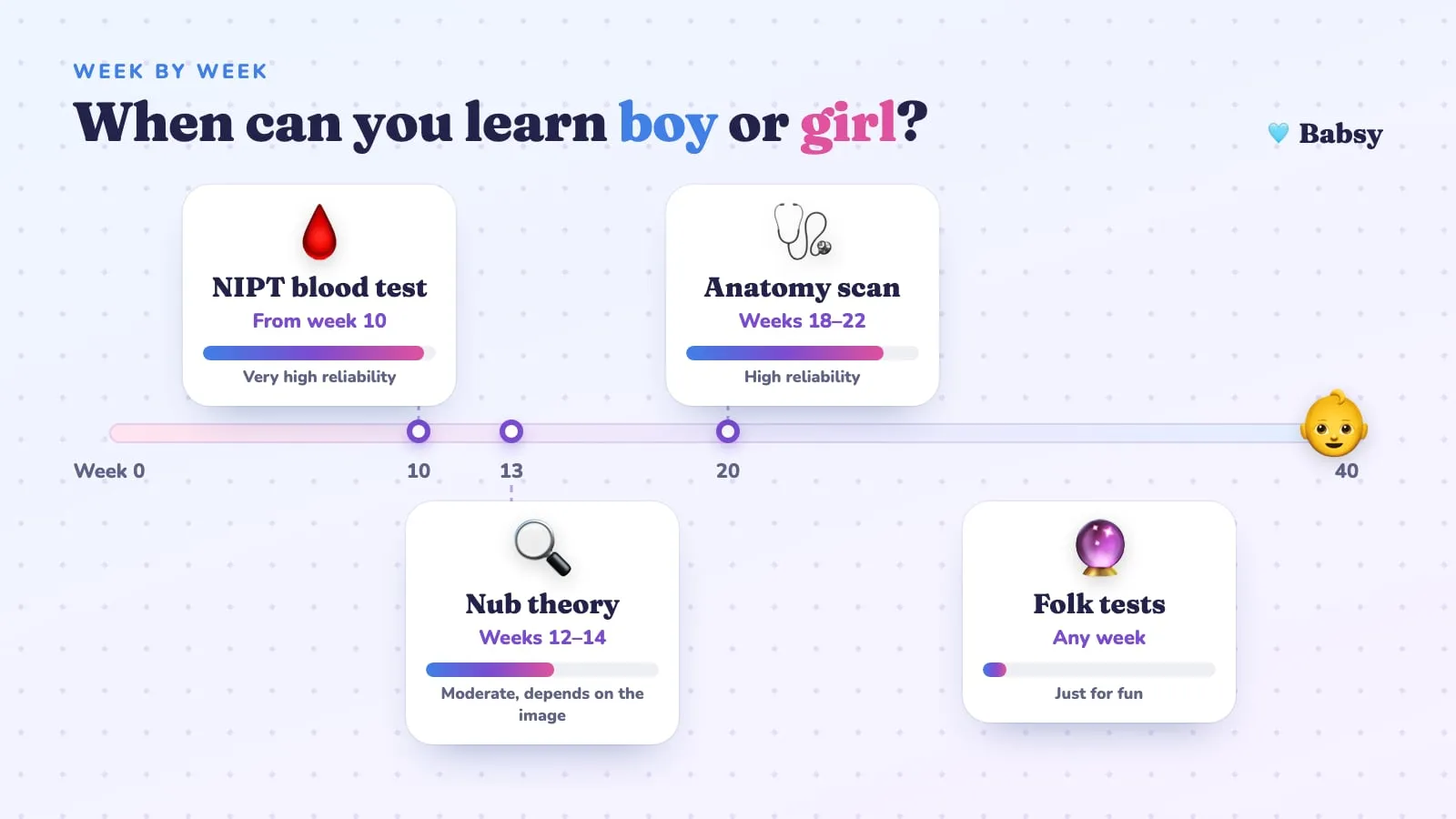
Weeks 10 and up: blood tests (NIPT)
Non-invasive prenatal testing (NIPT) analyses small fragments of your baby’s DNA circulating in your blood. It is offered mainly to screen for chromosomal conditions, but in many countries it can also report the presence or absence of a Y chromosome, which indicates sex.
- When: usually from 10 weeks.
- Reliability: very high for sex, though not perfect.
- Good to know: it is a medical screening test. Whether sex is reported, and the cost, depends on your country and provider.
Weeks 12 to 14: early ultrasound and the “nub”
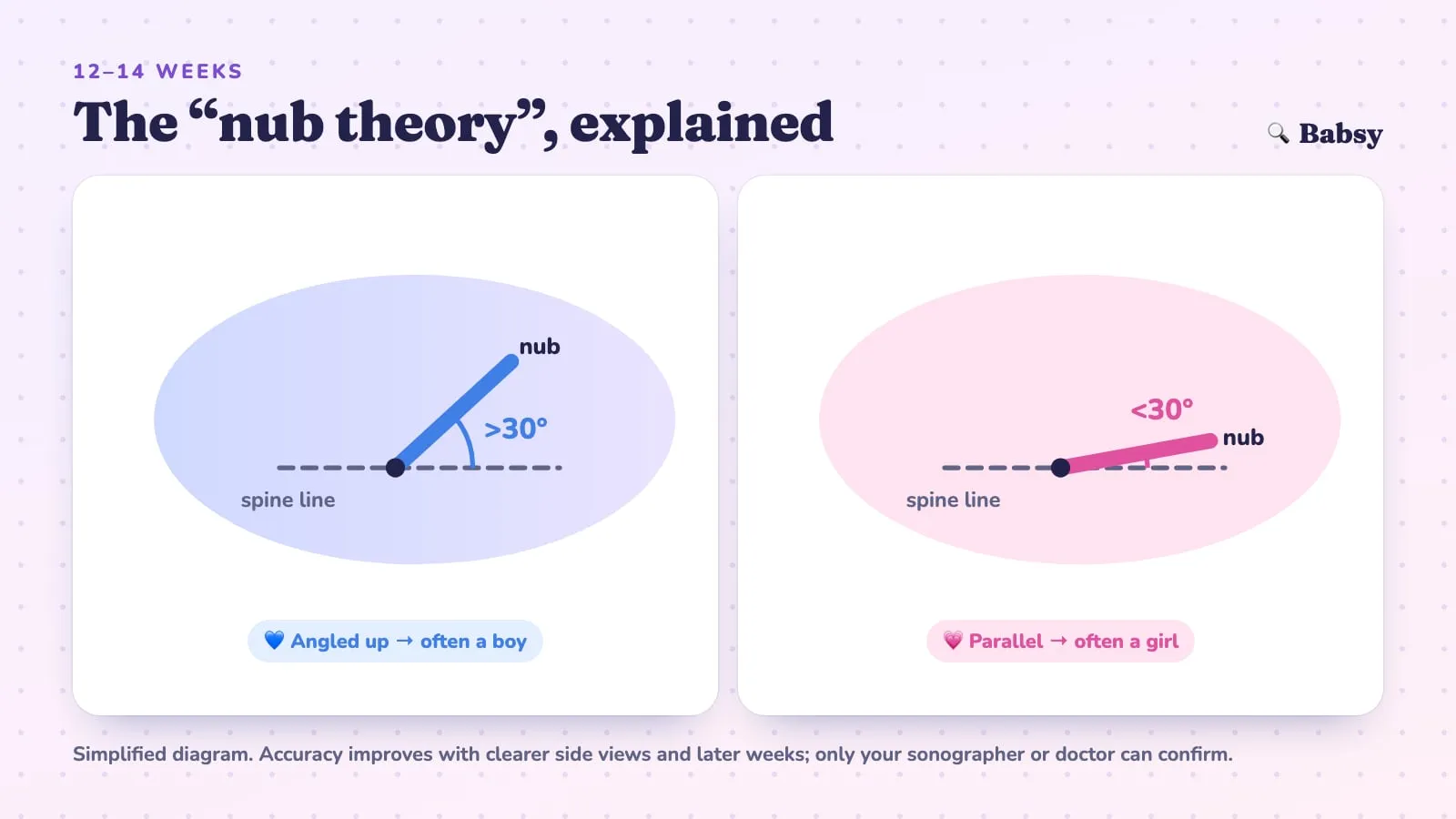
At the dating or nuchal scan, the genital tubercle (the “nub”) is visible. Some parents and sonographers look at its angle to guess: a nub pointing up more than about 30° is often linked to boys, a flatter one to girls.
- When: 12–14 weeks.
- Reliability: mixed. Accuracy improves the later the scan and the clearer the side view.
- Good to know: many clinics will not give an opinion this early.
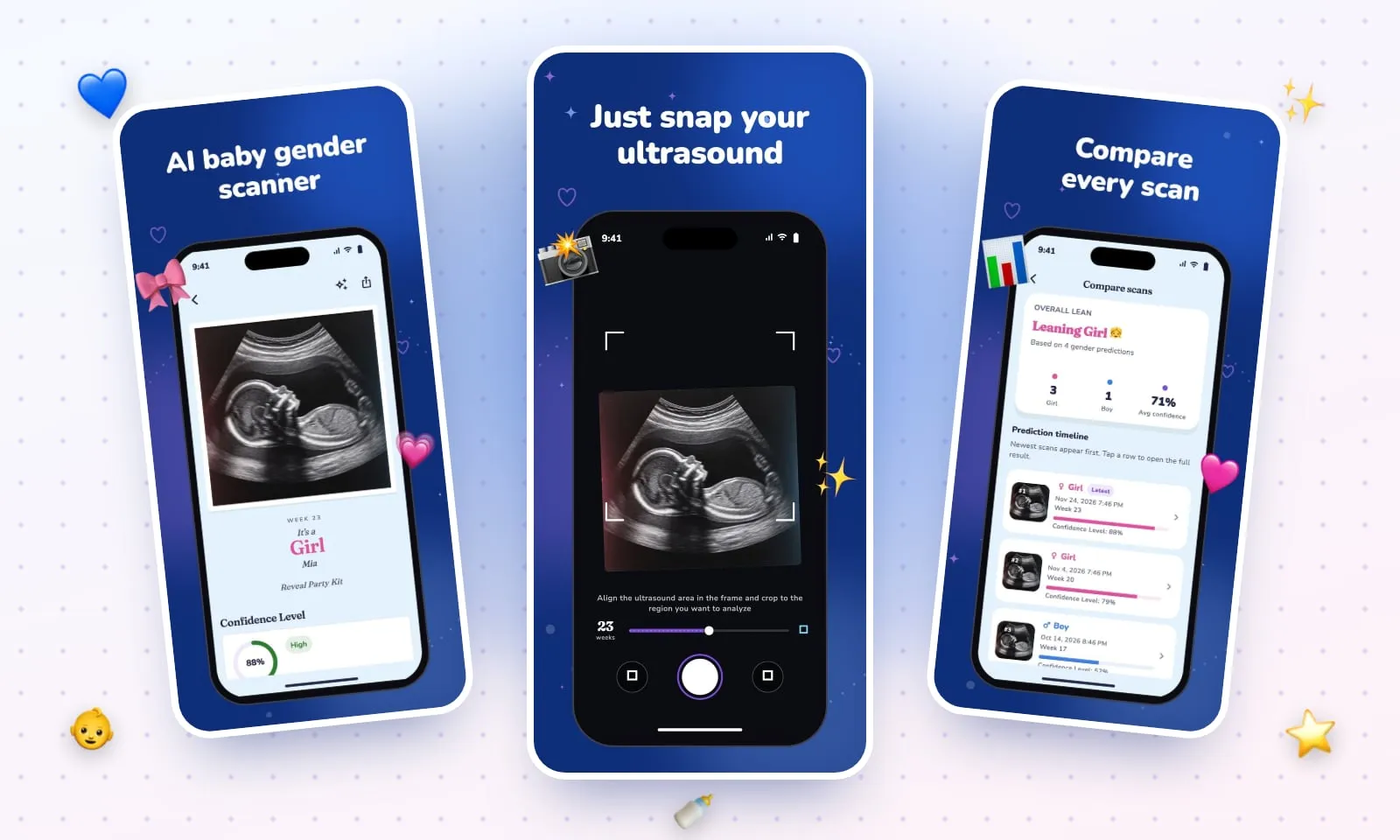
This is also roughly when an AI predictor such as Babsy becomes interesting: it looks at the same kind of image patterns. That is why Babsy shows a reliability hint before week 14 and a confidence score with every result.
Weeks 18 to 22: the anatomy scan
The mid-pregnancy anatomy scan checks your baby’s organs and growth. If baby is in a cooperative position, the sonographer can usually see the genitals clearly.
- When: 18–22 weeks.
- Reliability: high, but position, cord placement and image quality still matter.
- Good to know: if you’d rather keep it a surprise, tell the sonographer at the start.
Other options
- CVS or amniocentesis: diagnostic tests that reveal sex with near certainty, but they are only offered for medical reasons because they carry a small risk.
- At-home DNA kits: results vary widely by brand and sample handling.
- Folk methods: the ring test, the Chinese lunar calendar and heartbeat rate are fun traditions, not predictors. We cover them in our guide to old wives’ tales.
Quick comparison
| Method | Typical week | How reliable |
|---|---|---|
| NIPT blood test | 10+ | Very high |
| Nub theory | 12–14 | Moderate, depends on image |
| Anatomy scan | 18–22 | High |
| CVS / amnio | 11+ / 15+ | Near certain (medical use only) |
| Folk tests | Any | Just for fun |
The bottom line
If you can’t wait, an early scan and an AI prediction make for a fun guess, and a gender reveal is a lovely way to share the confirmed answer later. For certainty, rely on your healthcare provider.
Babsy is for entertainment only and is not medical advice. Always follow your doctor or midwife.
Sources: ACOG – Prenatal genetic screening tests, NHS – 20-week screening scan.