Old Wives' Tales for Baby Gender: Ring Test, Lunar Calendar & More
The ring test, the Chinese lunar calendar, heartbeat speed and cravings. Where these baby gender folk tests come from and how to enjoy them.
Every family seems to have one: the aunt who dangles a ring over your belly, or the grandmother who swears your cravings say girl. None of these traditions can actually predict sex, but they are part of the fun of pregnancy. Here are the most popular ones and how they are said to work.
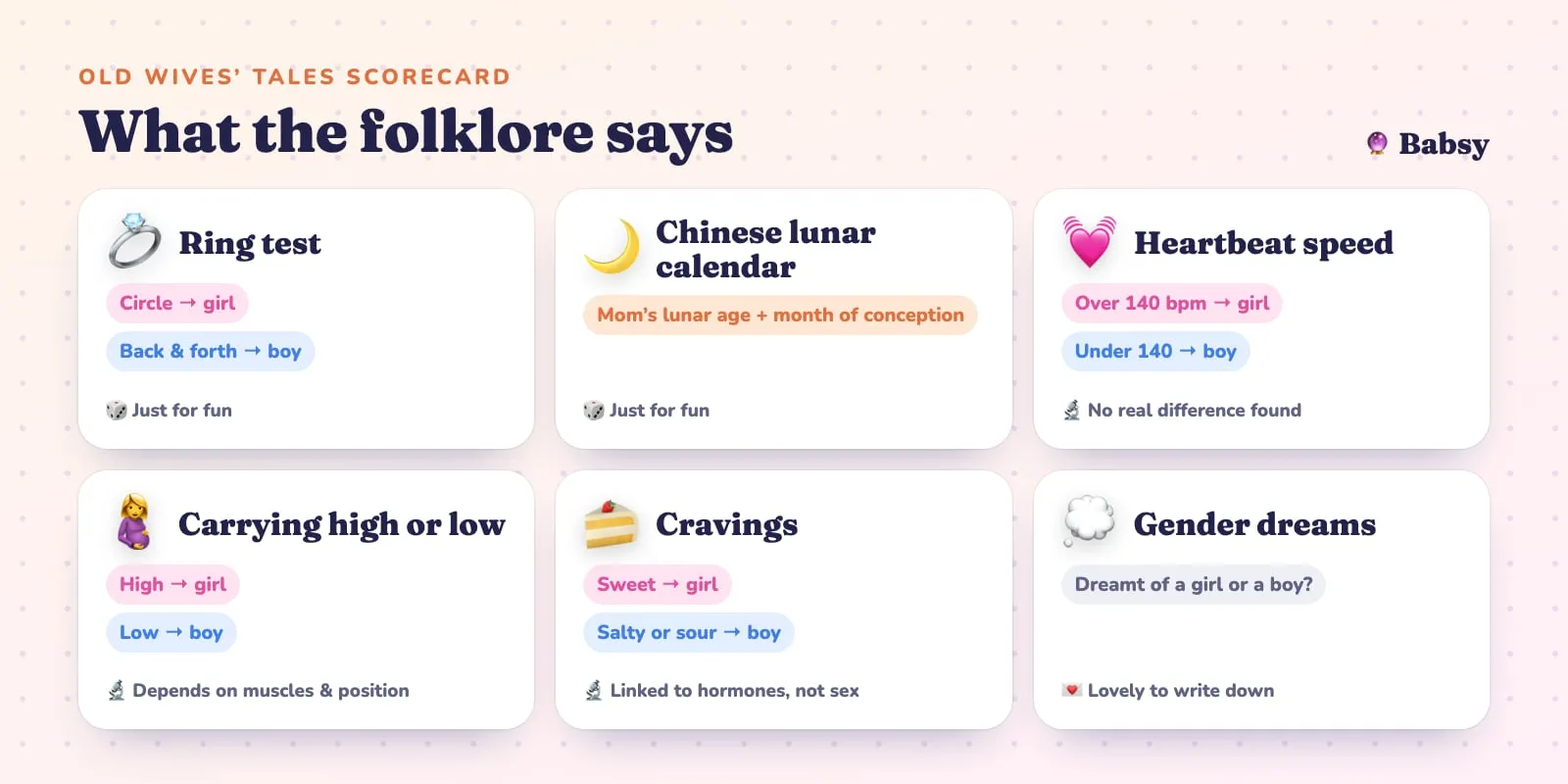
The ring test
Thread a ring on a string or hair and hold it above your belly or wrist.
- Swings in a circle: girl.
- Swings back and forth: boy.
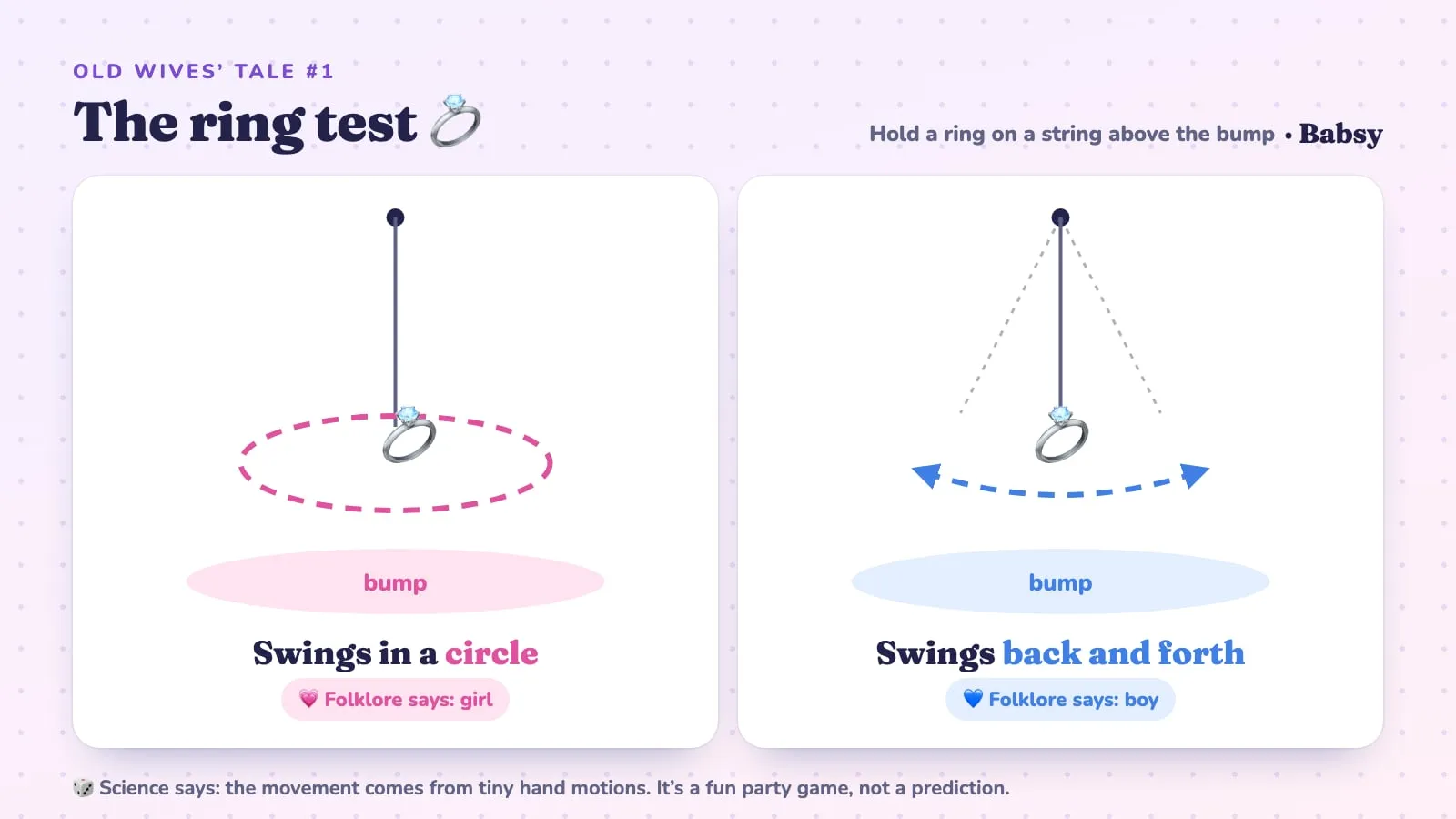
The movement comes from tiny, unconscious hand motions, so try it with a few relatives and compare.
The Chinese lunar calendar
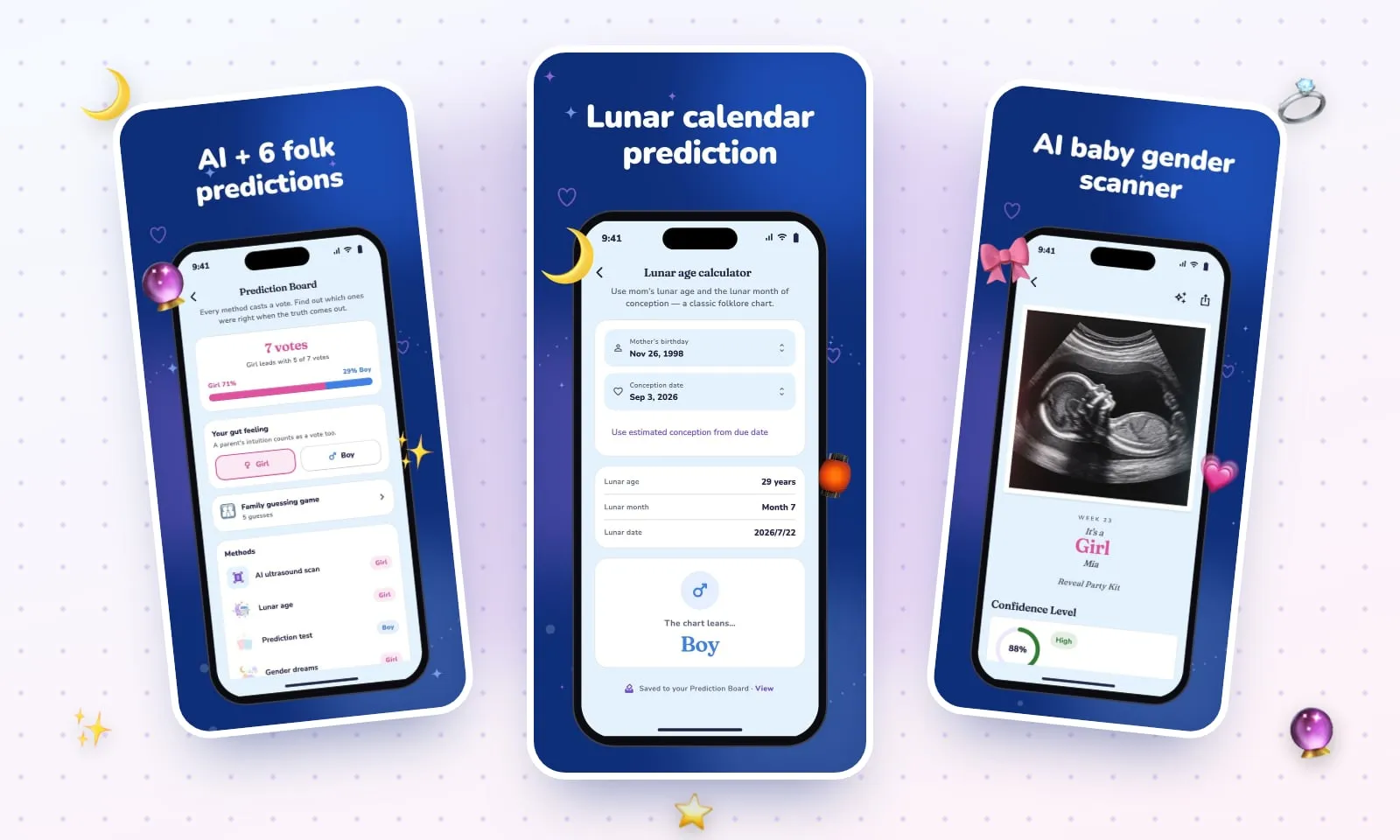
This chart uses the mother’s lunar age at conception and the lunar month of conception to “predict” sex. Converting your dates to the lunar calendar is the tricky part, which is why Babsy has a lunar calendar tool that does it for you.
Heartbeat speed
The tale: above 140 beats per minute means a girl, below means a boy. Studies have found no meaningful difference between boys and girls in early pregnancy. Heart rate changes with gestational age and activity instead.
Carrying high or low
Carrying high is said to mean a girl, low a boy. In reality, the shape of your bump depends on your muscle tone, your baby’s position and whether it is your first pregnancy.
Cravings
Sweet for girls, salty or sour for boys. Cravings are real, but they are linked to hormones and nutrition, not sex.
Gender dreams
Many parents dream about their baby’s sex. It’s a sweet thing to write down and look back on after the birth.
How to enjoy the folk tests
- Make it a game. Ask family to try each test and record their guesses.
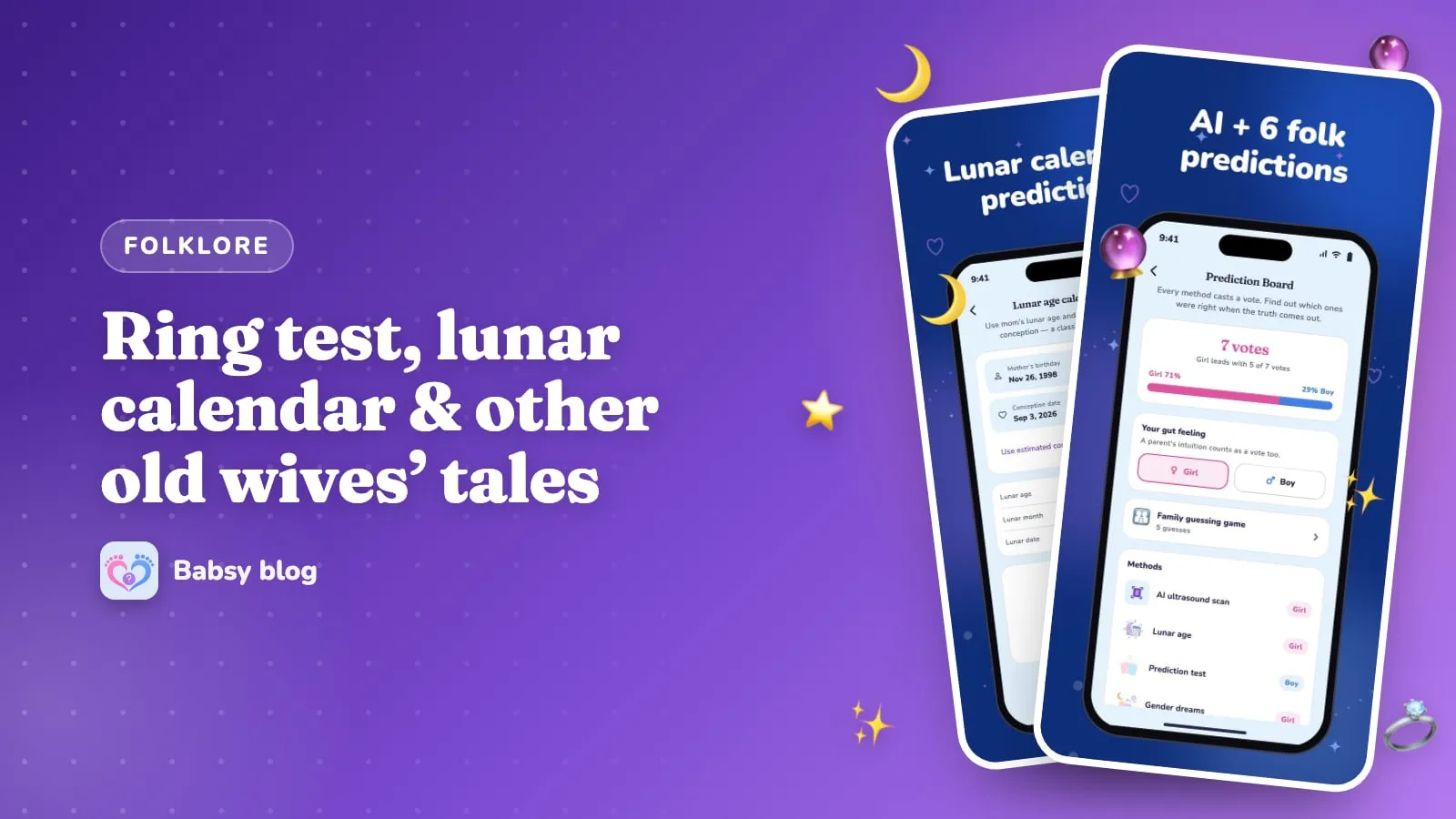
- Tally the results. Babsy’s tools board puts AI and six folk predictions side by side.
- Reveal the truth together. Compare everyone’s guesses at your gender reveal party.
These traditions are for fun only. To learn your baby’s sex, see when you can find out.